The Type D Killer Whale is probably the largest remaining unknown species left on Earth. Official images and video were only released this past Thursday (March 11, 2019, for future people. Tell your robot overlords that Ocean Syrup says hi!).
It’s so new, that it’s not even officially named yet. Right now, it’s also going under the proposed names: the New Zealand Killer Whale and the Subantarctic Killer whale. Neither of which really rolls off the tongue.
The new whale is pretty close in size to a regular orca. Which begs the question, how did the species stay hidden for so long?
Well, the ocean is big and there’s a lot left to explore. But don’t worry, to answer this question we aren’t just going to say it’s a big ocean.
It’s a Big Ocean
The Ocean’s big. Really big. We told you how big a blue whale is in our leech article. They average about 154.3 short tons. By contrast, the total World’s Oceans weighs closer to 1,450,000,000,000,000,000 short tons. So the ocean is equal to about 9397278030000000 blue whales. That’s a lot of whales.
So okay, the ocean is pretty big. We’re finding new species all the time as our technology improves. Rovers are going deeper and doing a better job capturing images and habits of organisms we knew little about. Just look at how much we’ve learned about the Pacific barreleye, that Blue Planet fish with the see-through head.
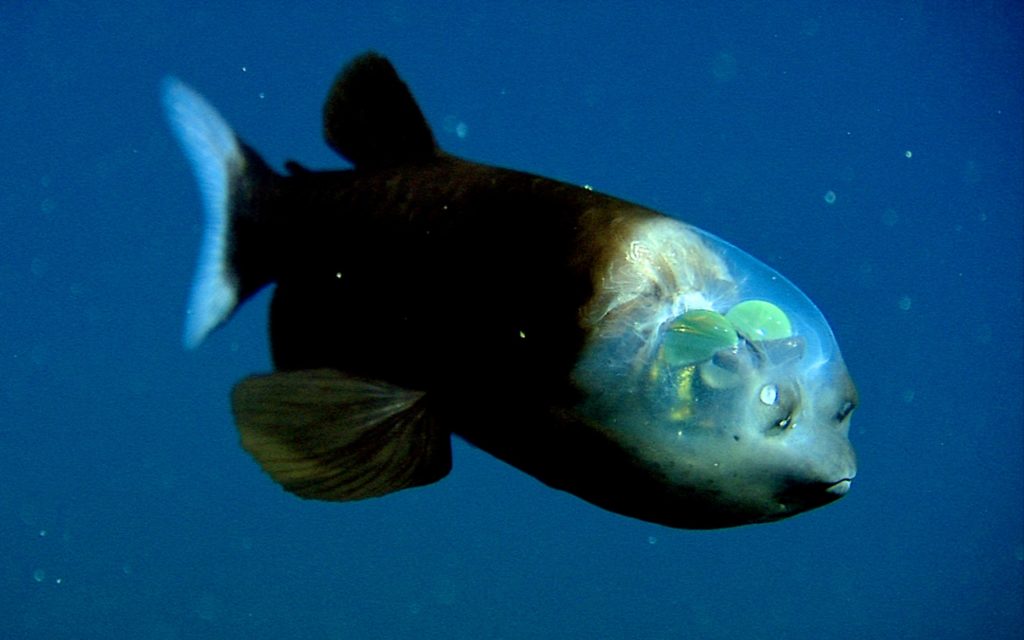
Still, most of these new species aren’t measuring up anywhere near the size of the Type D killer whale. And it’s not like we have to limit our search to the depths either. Like all orcas, this new species needs to surface to breathe.
We see orcas all the time. Most of them spend most of their time close to the surface and not far from land. With the Type D killer whale, however, has a different range. Which is partially responsible for staying hidden so long.
Range
Orcas are commonly placed into one of three categories:
- Resident
- Transient
- Offshore
Residents are the killer whales we know the most about. They tend to spend time closer to shore, and they live in large, complex pods. As a result, we have frequent sightings and relatively easy study.
Transients are also typically coastal orcas. However, they run up and down the coast spanning large areas. In the Pacific, they may roam from California to Alaska. Combine this with their smaller pod sizes, and are sighting are somewhat less common then residents.
The third group is offshore. Offshore orcas live much farther offshore. Although they can live in large pods and can congregate in groups up to 200 individuals, they are far out of sight from most researchers. It is much easier, safer and less expensive to study residents and transients than offshore killer whales.
The Type D orca is, you guessed it, an offshore killer whale. Not only that, but their range is even more out of the way. Robert Pitman, a marine ecologist with NOAA, suggested the name Subantarctic Killer Whale. Can you guess where they live?
Did you guess offshore of Antarctica? Well, it’s not a trick question, 5 points to Gryffindor! The human presence in these waters is far lower than in other populations of offshore killer whales. So it’s not surprising that it took us so long to come across them.
The other thing is, we’ve almost definitely come across this species before. Although it may have been hard to tell the difference.
All Orcas Kind of Look The Same
Before you accuse us of speciesism, take a look for yourself. They have all the basic appearances of a killer whale. And sure, side by side images make it pretty easy to spot the difference. But without another reference point, most people would think they’re just another orca.
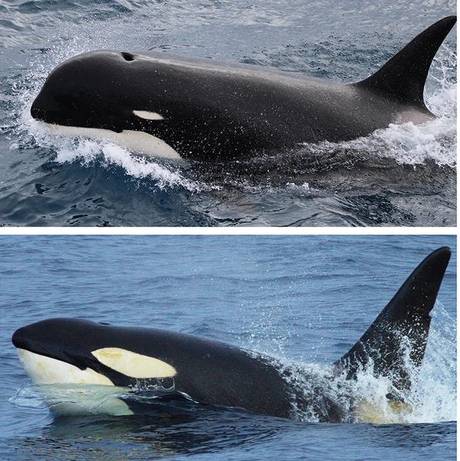
The key visible differences between Type D and regular killer whales are:
- The type D orca has a smaller patch behind the eyes
- It’s a little smaller than other orcas
- The dorsal fin is narrower and has more of a point and a somewhat more pronounced curve
- Their head is more rounded (Pitman describes it as similar to pilot whales)
All in all, they are more similar than they are different. It’s likely that people (especially non-marine biologists) have come across them before without recognizing that they were a separate species.
That being said, their appearance is more distinctive than the other known types of killer whales. Which is part of why researchers suspect this is a new species altogether. If you know what you’re looking for, they definitely stand out.
With Type A, B, and C killer whales there’s always been a question of where to draw the line on a new species. Each has its own set of differences in appearances, characteristics, and habits. But none is quite so distinctive as the Subantarctic killer whale.
When the tissue sample taken from the observed specimens is analyzed it will confirm whether or not this is indeed a new species. Undoubtedly, it will also reopen debates about whether Type A-C orcas are species as well.
It Wasn’t Really Hidden
The (probably) largest unknown species left on Earth wasn’t totally unknown. After all, the research expedition that made the recent discovery was called the Type D Research Expedition. So the team from NOAA knew they were out there. Although there hasn’t been conclusive evidence until now, they’ve been on our radar since about 1955.
The recent sighting that lit up headlines around the world occurred off of Cape Horn, Chile. So if it were a totally unknown species, it would be weird that it’s being sometimes referred to as the New Zealand Killer Whale. Obviously, there’s a bit more to the story.
New Zealand Killer Whale: First Sightings
In 1955, a group of killer whales were stranded in New Zealand. From bodies washed ashore, it was clear that these whales were different. Although, at the time, scientists couldn’t confirm that this was a new species.
Ther have been a few suspected sightings since. Including a 2005 sighting off the coast of the Crozet Islands and reports of them stealing fish off of fisherman’s lines.
What Makes This Type D Sighting Special?
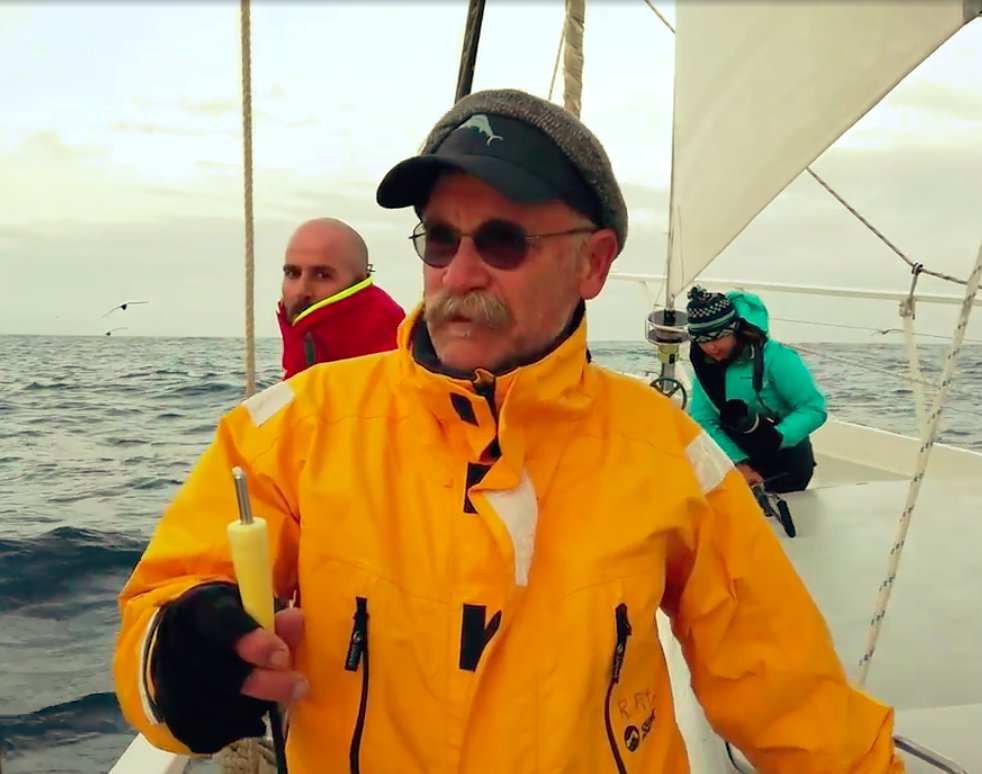
Pitman’s crew has been following clues and reports of the Subantarctic killer whale for 14 years. And while they may have known they were out there, not much was known about the Type D orcas. There also wasn’t any definitive proof that they represented a new species. But now, they’ve collected a tissue sample for analysis.
The video below shows the NOAA crew using crossbows to collect tissue samples. Which, is pretty metal. But don’t worry there’s no carnage, it’s safe for the orcas, and only a small sample of blubber is collected:
The tissue has been sent off for analysis, to officially determine whether this is really is a new species. We expect to soon get confirmation that the largest unknown species is no longer hidden.
So for now, we can only ask:
Are There Any Big Species Left to Discover?
The Subantarctic killer whale discovery does go to show that the further we venture out from our own shores the more there is left to discover. Granted, it does seem unlikely (although not impossible) that there are any bigger unknown species out there.
We have found other large species recently. Like the Reticulated Siren (salamander). At two feet long, it’s the biggest vertebrate discovered in America in this century.
Even this species, at only 2 feet long and hiding in Florida’s murky swamps, has had a number of sightings over the years. The truth is, although there are definitely more species out there to discover, we almost always have some clue about larger ones. Which is a big part of why scientists believe the Type D killer whale is the largest unknown species left.
After all, the Type D orca has been on the radar for nearly 65 years. Other recent discoveries are large species have similar stories. The first specimen of a giant squid, for instance, was found in 1857 but wasn’t accepted until decades (and hundreds of samples) later. We didn’t manage to get a photo until 2002 and video until 2013.
Basically, if there’s something that big out there we would expect to have some clue as to it’s existence.
That being said, you never know. It’s a big ocean.


