AKA: How Much Blood Can A Leech Drink
We’re all familiar with the old medical practice of leeching. When we think about leeching, we think about days back when the goal of medicine was just to make a change. Back when barbers performed surgeries and doctors thought everyone was made up of bile and phlegm.
While the use of leeches in medicine dates back to Ancient Egypt, it’s still in existence today. For the most part, they’re used in surgeries because of their ability to secrete anticoagulants. Leech therapy is making a bit of a comeback in Hungary and Sweden where it is used in a handful of treatments.

All in all, what all these types of treatments throughout time have in common, is they rely on the leeches appetite for blood.
Are Leeches Actually Voracious Blood Suckers?
Just about anything that drinks blood gets a bad name. And of the 700+ species of leeches out there, the vast majority drink blood. Despite this, they’re hardly vicious animals. Some species are even full-on vegan - eating decaying plants.
Others don’t fall into either category. The red worm feeds on its prey by swallowing it whole:
Leeches can be timid with humans. Trying to force a leech to bite you can be difficult. They prefer a stealth attack, so if you pick one up and put it on you it’s more likely to try and shuffle away.
As well, their main target is usually frogs and other amphibians. Of course, they won’t shy away from mammals given the opportunity.
What to do if you’re bitten by a leech?
If a leech bites you, odds are you won’t even know. As we mentioned, they’re all about stealth. They’re aquatic ninjas, sneaking up on unsuspecting prey. Biting into their prey, they secrete anesthetics and anticoagulants into the body while simultaneously sucking out blood.
The anesthetic keeps you from feeling the pain, people often don’t notice they’re bitten. And the anticoagulants keep the blood flowing. As well, without the anticoagulants in the leeches system, the drained blood would eventually clog up in them, puffing them up into a St. Macy’s Day Parade balloon version of a leech.
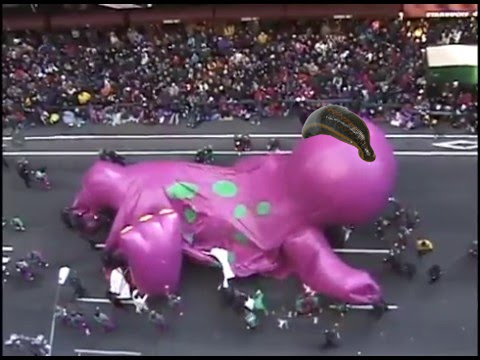
The most likely reason you’d notice a leech is that its feeding session is pretty long. They’ll often feed for 20 to 40+ minutes.
If you do notice a leech, you can just pull it off. They don’t burrow into your body or leave behind teeth, so removal isn’t really painful or risky. The anticoagulant keeps the wound from closing, but it’s pretty small.
Is A Leech Bite Dangerous?
A single leech isn’t a threat. The only concern really would be the rare instance where someone is allergic to the bite. Even then, reactions are not usually severe. More likely, you’ll just want to make sure the wound doesn’t get infected. Especially if you’re out in the wilderness.
Even after the long feeding session a leech only takes about 5-15ml of blood, depending on their size. So you’re going to be okay.
In fact, you might want to leave it on while it feeds. Take pictures with your camera or phone. Observe and note any patterns, colouration and movement. You could get lucky and discover a new species.
How Many Leeches Would It Take To Kill A Human?
You’re determined to do this, aren’t you? That’s okay, it’s that same morbid curiosity that got us to write this in the first place. Depending on the size of the leech and the person, it would take about 300 to 1100 leeches to bleed an adult human dry, or 120 to 440 leaches to kill.
The numbers on that work out pretty simply. The average human adult has about 4.5 to 5.5 litres of blood, and leeches suck about 5-15 ml in one session. After a feeding, leeches can subsist on the blood for several months. So we decided to only count one feeding per leech since your body will reproduce all the blood long before they need to feed again.
Of course, a human would die long before bleeding out completely. Generally, once you lose about 40% of your blood your body loses the ability to control blood pressure and you have a high risk of death.
We used Hirudo Medicinalis, a common medicinal leech for these numbers. Of course, if you want to take a look at a species like the 18” Giant Amazon Leech, we’re looking at a creature more than twice the size, so it would take far fewer to get the job done.
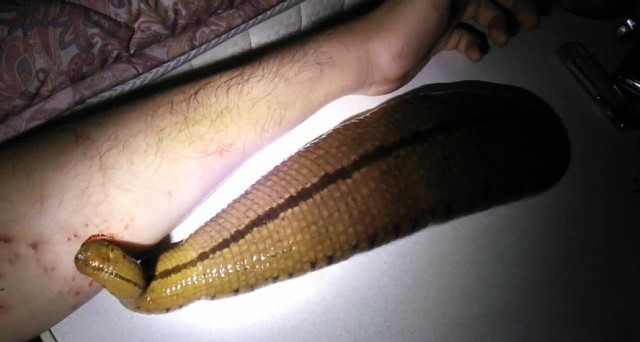
But that wouldn’t happen, right?
Well…
Lower invertebrates, like leeches, do to tend to form swarms when they’re in groups. Swarms can be anywhere from 10s to 1000s. And leeches have been observed in large group formations.
In theory, an opportunistic leech swarm could attack and kill a fully grown adult. Although that would rely on the human not fighting them off. Even if you’re a super deep sleeper, just about anyone is going to notice thousands of bites all at once, even with the anesthetic secretions.
All in all, it’s pretty unlikely.
Although it’s not to say leeches are altogether harmless. There have been deaths from people in North Kenya drinking water containing the Myxobdella Africana leech. The victims suffered anemia, resulting in death. In cases treated with blood transfusions, the patients have survived.
Not to forget, as recently as 2008, a 65 year old man in Turkey was rushed to ER with 130 leech bites. Fortunately, he survived after receiving 8 units of frozen plasma. If it weren’t for the quick intervention the result could have been worse.
Still, most of the time, leeches are low to no risk. Their bad reputation comes from their blood-sucking nature and their virtually alien genetics.
But, as long as we’re talking about hypotheticals, why stop at humans…
How Many Leeches Would It Take To Kill A Blue Whale?
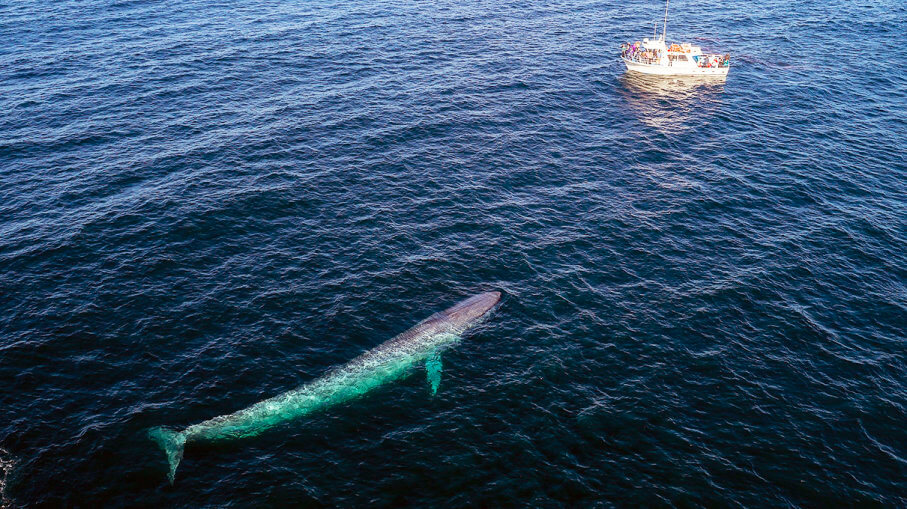
A blue whale is big. And not the way other animals are. Consider an elephant, that’s a big animal. An average African Elephant weighs about 12,000 lbs - it’s a lot. But in a blue whale, their blood alone weighs 14,000 lbs.
An entire blue whale is more like 140,000 kg (about twice the weight of a space shuttle). It’s easier to compare them to buildings than to other animals. In the animal kingdom, they’re the biggest, heaviest things that’s ever existed.
What we’re saying, is this is going to take a lot of leeches.
For the sake of ease we’re assuming we can keep the same ratio as for sucking blood out of humans (5-15 ml per session). Alright, let’s get a little nerdy here:
- Since we don’t have blue whale blood handy, we’re assuming a blood weight of 1.04 g/cc (1000 g = 1 kg, 1000 cc = 1 liter)
- 14,000 kg of blood translates to roughly 13,461.539 liters
- That’s 13,461,539 ml
- The average leech sucks 5-15 ml
- 13,461, 539 ÷ 5 = 2,692,307.8
- 13,461, 539 ÷ 15 = 897,435.9
So depending on the size of the leeches it would take about 900 thousand to 2.7 million leeches to bleed a blue whale dry. Or about 360 thousand to 1.1 million to kill (assuming the 40% blood loss holds true for whales).
Leech Bonus Facts:
Alien Genetics!
Okay, they aren’t aliens, but they sure are like something out of a sci-fi movie. We’re talking creatures with green blood, 32 brains, 10 stomachs, 18 testicles, and 2 sets of genitalia. It’s not what you’d call normal.
32 Freakin’ Brains?
Having two sets of genitalia is maybe the least weird thing about leech biology. Leech bodies divide evenly into 32 segments. While they’re far from the only animal with segmented organs, they’re still unusual as each of their segments has its own brain.
That doesn’t mean you can cut a leech into 32 pieces and have it live on, but it’s definitely strange.
Green Blood?
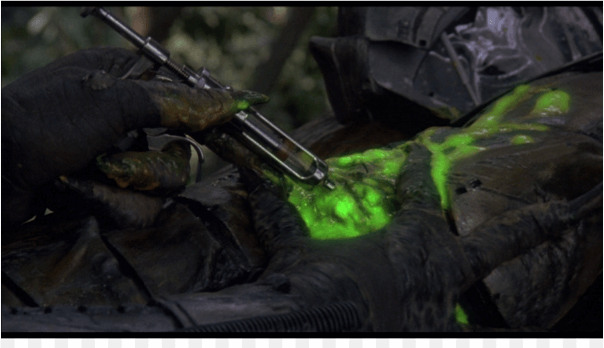
Fans of the Predator movie series are no stranger to green blood. And let’s be honest, blood colour is hardly the strangest thing about leeches. Unlike the Predator aliens, leech blood isn’t acidic, but in many species it is green.
In humans, Haemoglobin is the primary protein in our blood. In many leeches, the protein Chlorocruorin is the dominant protein. This protein causes the greenish colour. The blood is a darker green when oxygenated.
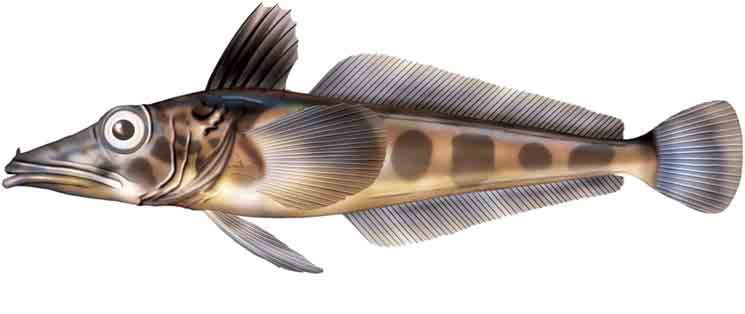
Green isn’t the only weird blood colour out there. Some marine worms have green blood whereas others like the subtly named, penis worm, have purple blood. Horseshoe crabs have blue blood that is hugely important for modern medicine. And the Antarctic Ocean has its own fascinating weirdo in the ocellated icefish, with its colourless blood.
Two Mouths

Just like Alien, leeches have two sets of mouths. But they don’t just have one mouth inside of another, larger mouth (so gauche!). Instead, they have one mouth on their face and another mouth on their butt.
Their face mouth is for eating, whereas the butt mouth is for grabbing while they feed. In species with jaws, both sets of mouths have teeth. And their mouths aren’t just for eating, they’re also how they move.
They inch along by grabbing the ground with their face and biting down. Then they slide the butt mouth up behind their face mouth and bite the ground. Then the the body throws the face mouth forward again. It’s similar to how an inchworm moves.
It’s not graceful, but you do what you can with what you have. Fortunately for them, most leeches are capable swimmers. Although they tend to prefer shallow water.
TL;DR
In short it would take 300 to 1100 of standard medicinal leeches to bleed a human dry. It’s pretty unlikely, and I can’t find any cases of it happening, but it is theoretically possible since they do exhibit swarming behaviour.
Still, with all their medical uses, we’re lucky to have these bloodsuckers around.


