Picture yourself on a whale watching tour. Imagine the excitement and exhilaration of a whale surfacing right by your boat. You lean over to take a picture or give it a gentle pat, and it blasts your whole boat with a fountain from its blowhole. Everyone’s laughing, smiling, and clapping - you all feel blessed by this interaction with nature’s gentle, majestic giant.
Congratulations, you’re soaked in whale boogers.
The blowhole is, basically, a whale’s nose. So what’s coming out of the blowhole is basically the same as would come out of your own nose.
How Whales Breathe
Most of our interaction with whales happen because they, unlike fish, have lungs instead of gills. This means they need to surface to breathe. Whales actually have a similar respiratory system to humans with a larynx, pharynx, trachea, and lungs. The biggest difference is whales only breathe through their nose.

Unlike a human, a whale’s nose (blowhole) isn’t directly connected to the mouth. They have evolved a laryngeal plug that blocks the contents of the mouth from entering the lungs. This is important since it lets them eat without water entering their lungs and drowning them.
When a whale surfaces the first thing it does is expel all the remaining air to breathe in fresh oxygen. The whale has a nasal plug a little under the opening of the blowhole.
This prevents water from getting into the trachea. So what comes out actually contains very little water.
Mostly, what comes out it hot air. The water at the top mostly turns into a mist, and some of the mucous lining from the nose comes out as well.
Can Whales Breathe Through Their Mouths?
Because of the laryngeal plug, whales are usually thought to not be able to breathe through their mouth. Although it’s possible that some species can control the plug, it’s easier to breathe out of the blowhole and offers less risk. However, there is evidence of at least one dolphin breathing through its mouth.
A team in New Zealand observed a Hector’s dolphin that appeared to be breathing exclusively through its mouth. Upon closer inspection, they could hear the breathing sounds coming from its open mouth.
Over the next few years, the same dolphin was witnessed practicing this behaviour by other teams in the area.
By 2015, it was concluded that he was indeed breathing through his mouth. Film showed that the dolphin never opened its blowhole while surfacing - meaning it had to be breathing through its lungs. This challenged the previous belief that whales are incapable of breathing through their mouths.
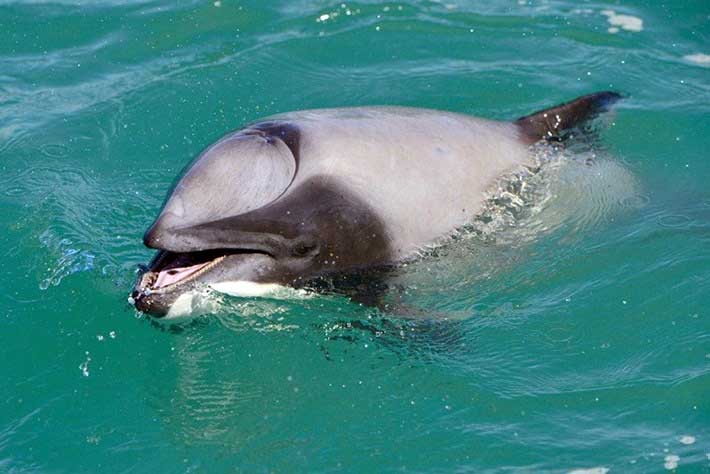
It was a rare instance of intellectuals being impressed by a mouth-breather.
Still, most whales (including dolphins), most of the time, will not attempt to breathe through their mouths. Even those with control over the laryngeal plug are better off leaving it in place. Dolphins have been found dead after moving the plug while swallowing large fish.
DIY Blowhole
Since their respiratory system is so similar to ours you can basically try it out for yourself. Take a deep breath and hold it tightly. When you need to breathe exhale sharply through your nose, emptying your lungs in a quick blast. What comes out? Probably not just hot air.
Gross, now’s probably a good time to wash your hands.
Now consider that the salt water at the top acts almost like the saline solution you might use to clear a stuffy nose. This environment loosens congestion allowing for more boogers and phlegm to fly out.
Is it Gross?
It may be mostly hot air and mucus, but it’s not really that much like getting sneezed on. And as far as whales go, it’s not that bad. Consider ambergris - which depending on your perspective is either whale vomit or poop. It’s a famously expensive perfume ingredient, and some people even eat it.
Next to that, a little whale air isn’t so bad. The whale’s not going to give you a cold, and you won’t be coated in boogers (just a light misting). If you get up close to a whale, don’t worry about what’s coming out of the blowhole.
Enjoy the spectacle, and maybe keep your mouth closed.