When you lose a glove, you’re pretty much out of luck. You can keep the remaining glove out of hope that one day you’ll find the other one. But that hope is almost always in vain. And every time you see that lonesome, single glove, it annoys you again.
But every now and then, someone, somewhere actually finds that lost glove. When that happens it’s a similar rush of triumph and surprise only known by those who’ve discovered a living specimen of an ‘extinct’ species, or those who witnessed Kawhi’s four-bounce-buzzer-beater (please stay).
In conservation biology, these once lost animals are called Lazarus Creatures.
What’s a Lazarus Creature?
In the Bible, Lazarus is some guy who something happened to (it’s a long book with a lot of characters, like something George R.R. Martin would write). In science, a Lazarus creature is something that appeared to have gone extinct, only to reappear unchanged.
This can be an animal that was gone from the fossil record for millions of years, or one that resurfaces after being declared extinct.
There’s been some scientific debate over whether or not the Lazarus taxon is valid since there’s no defined length of time that the creature has to be absent. But we don’t care,
Marine Lazarus Creatures
1. Coelacanth
When it comes to the Lazarus taxon the coelacanth is, without a doubt, the most well-known. And that’s for good reason. This species of fish was believed to have gone extinct 66 million years ago, around the time of the K-T extinction.
Even if you haven’t heard of the coelacanth, there’s a good chance you know of it under the name “Relicanth” from the Pokemon series. And honestly, their Pokedex entry basically has it right:
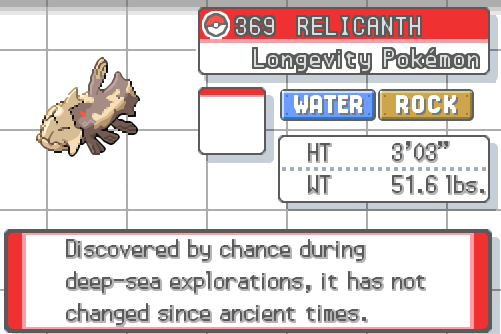
The species isn’t just remarkable because of how long it was believed extinct - appearing to disappear 66 million years ago and being rediscovered in 1938. What makes it so spectacular is that it remains unchanged after millions of years.
A living fossil
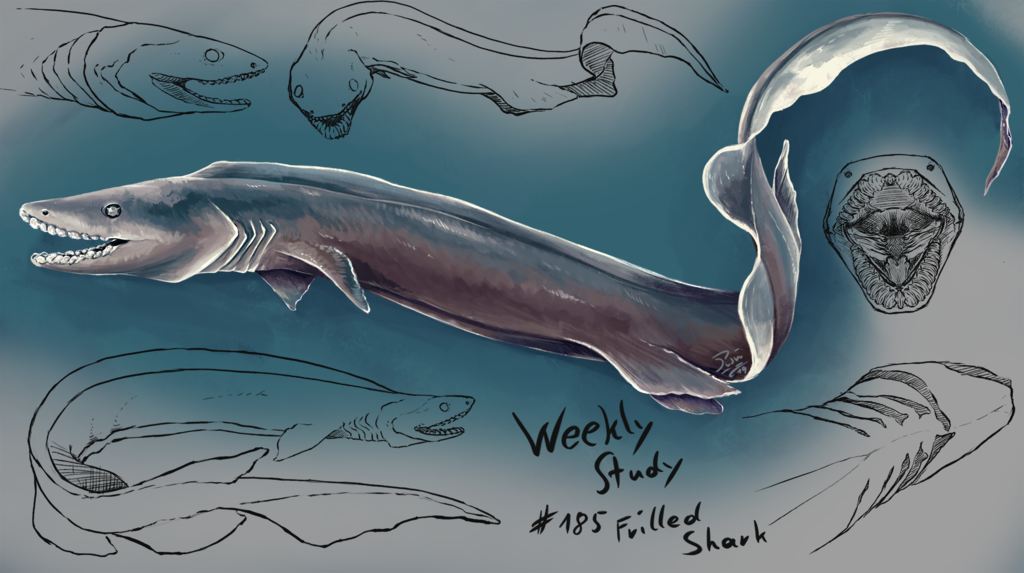
The coelacanth is a living fossil, which means that the current species is considered identical to its fossil record. Other examples of living fossils include crocodiles and the frilled shark.
And, just like you’d expect from something called a living fossil, this fish doesn’t really look that exciting. It’s not fast, it’s not smart, but at least it’s big. They can get up to 2 meters long, weigh 200lb, and live up to 60 years. That makes an encounter more exciting than running into another living fossil, the horseshoe crab.
What the Pokedex entry got wrong is how it was discovered. The 1938 discovery of the coelacanth was an accidental bycatch by a fisherman. Since then, however, many more including a second species, the West Indian Coelacanth
Although this fish isn’t fit for eating — the oils in its tissues give it a foul taste — it remains threatened by commercial fisheries. Deep-sea trawling is still a common method of fishing that is destructive and produces a lot of bycatch — pulling up creatures like the coelacanth.
2. Smoothtooth Blacktip Shark
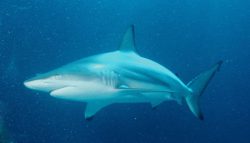
Maybe the big fossil-fish didn’t do it for you. That’s okay, we’ve all seen fossils at the museum. And we’ve all wanted to move along and see dinosaurs bones and mummies. But here’s a species worth skipping the gift shop for - the smoothtooth blacktip shark (Carcharhinus leiodon).
With its smooth teeth and blacktipped fins, the origins of this shark’s name remains a mystery.
The first specimen was discovered in Yemen back in 1902 but no one got around to examining it and declaring it a new species until 1985. Of course, it didn’t really matter that science dragged their feet on this one since no other specimens were found again until 2008.
Since then we have found them multiple times, although they remain a rare sight and are classified as an endangered species. Despite their rarity, there’s a good chance they look familiar to you. This is probably because they closely resemble their relative - the blacktip shark.
Like the coelacanth, being caught as bycatch threatens this recently rediscovered species. Between longlining, gill nets, trawling, and habitat destruction, this shark could easily be gone again soon.
3. Neptune’s Cup

The Neptune’s Cup looks like a plant but we assure you, it’s an animal. I know it doesn’t look like it. They don’t have limbs, circulatory systems, brains, or Instagram. They aren’t like us. But, they come from the Sponge phylum.
Although sponges were the first to branch off from the evolutionary tree of animals, they are still part of that tree.
That early branch off does give us a better understanding of how they can be so different from other animals. In fact, some scientists hypothesize that they once did have brains but had more success by evolving without them. They were simply better off putting their resources into other things than developing a brain. And who can blame them? Have you ever gone to a party instead of studying for a test - and wasn’t it a whole lot more fun?
But the brainlessness isn’t what makes the Neptune’s cup special. It’s the case with all sponges. Yes, even him:

A chalice worthy of the sea god
The Neptune’s Sponge looks like a giant wine glass, a meter wide and a meter tall with a giant stem, it’s among the largest of the sponges. They can reach as large as 5 meters. The species was aggressively harvested and used for all sorts of purposes, including infants’ bathtubs.
By the early 1900s, the entire species seemed to have gone extinct as a result of overharvesting. However, in 2011 a few specimens were found in Singapore and Thailand. Today, conservationists are undergoing efforts to get them to reproduce and help them return from the brink of extinction.
4. The Short-Nosed Sea Snake
If not quite ironically then at least dad-pun-ically, this sea snake was hard to see. The species was discovered in 1926 on the Ashmore Reef (Australia). But in the early 2000s, it completely disappeared from the area.
It was already known that they were facing threats from trawling, oil spills, and water contamination. So it was easy to accept as an extinct species when they vanished from the islands.
Then in 2015, a breeding pair was discovered on the Ningaloo Reef (also Australia). The reason for the move is uncertain, but at least they have survived - albeit as a critically endangered species.
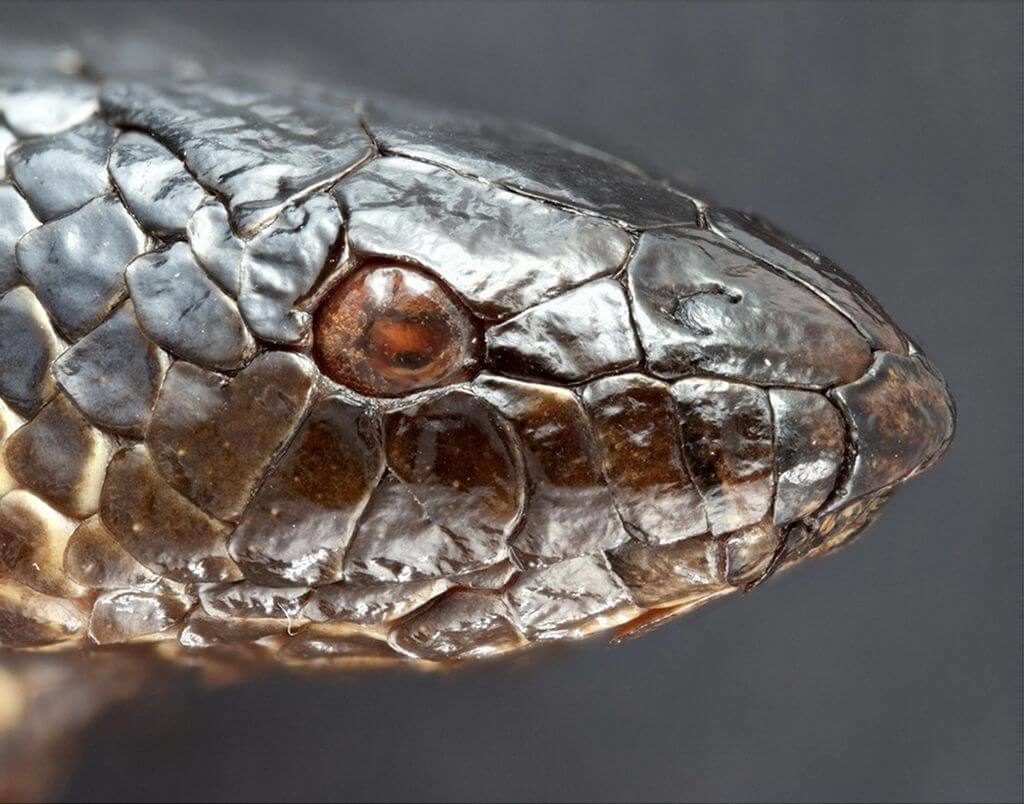
The short-nosed sea snake (Aipysurus apraefrontalis) is a venomous sea snake that grows up to about 2 feet long. Their faces are small and pointed, with jewel-like eyes and almost metallic looking scales. One of these guys would not look out of place on top of an evil wizard’s staff.
5. Arakan Forest Turtle

Yes, we can read. We know it’s called a forest turtle. But this little guy is semi-aquatic and their diet includes hunting fish. They are capable of living in aquatic or marine habitats. So we’re letting them on the list. Besides if you try and deny a turtle, you’re at risk of getting karate chopped.
A native to Myanmar, this species had the misfortune of being believed to be a miracle cure. Which didn’t work out for the patients or the turtle. Although cooks may see turtles as a soup that comes with its own bowl, they don’t have any mystical healing properties. As a result of this popularity in recipes and medicines, the population dwindled, disappearing after 1908.
But the Arakan forest turtle was finally rediscovered again in 1994. Although it remains critically endangered, it appears to be having some success in existing animal sanctuaries. As well, their scarcity has (at least temporarily) stopped them from being hunted commercially. It’s possible this species may make a comeback.
6. 7. 8. 9. Just A Whole Whack of Petrels

Various species of petrel have had a string of bad luck all around the world. The list of petrels once thought extinct, but since rediscovered includes:
- Bermuda Petrel: Extinct in 1620, rediscovery in 1951.
- Beck’s Petrel: 1929-2007
- Fiji Petrel: 1983-2009
- New Zealand Storm-Petrel: 1850-2003
The most notable of these is the Bermuda petrel, which disappeared for over 300 years. Although it is one of the rarest of all seabirds it is now used as a symbol of hope among conservationists.
English and the Spanish efforts to colonize Bermuda was devastated petrel’s population. While people ate a significant amount of them, the real devastation came from bringing over hog, pigs, cats, dogs, and rats. Those animals wreaked havoc, introducing predators that the petrel had never had to contend with.
Although to be fair, the rats weren’t on purpose.
10. The Hula Painted Frog
The Hula painted frog was gone for about 60 years. With so many frogs hibernating during the winter, maybe it’s not a surprise that these guys disappeared in the cold war. But like Captain America, they came back in 2011.

The Hula frog’s reemergence is fairly significant. For one they were the first amphibian to be declared extinct in the wild. So it’s pretty cool that they came back.
As well, their disappearance was due to environmental damage - the draining of Lake Hulu. But their re-emergence coincided with improving environmental conditions. So they’re a great example of how environmental efforts can make a real difference.

They’re also a pretty unique species. Like the coelacanth, they’re a living fossil. They’re the only remaining species of a genetic split that occurred over 30 million years ago.
11. 12. 13. 14. 15. 16. 17.18. 19. 20. 21. 22. 23. More Frogs and Toads
Beyond the Hula painted frog, a whole bunch of other frogs and toads have gone missing.
Just as a quick aside, here’s a clarifier on frogs and toads: All toad’s are frogs, but not all frogs are toads. Frog is a more all-encompassing term, and ‘toad’ is more specific
Just like how all skates are rays, but not all rays are skates. Or, hockey is a sport, but not all sports are hockey.
I’m not going to go into crazy detail about each one, so here they are:
- Armoured Frog (Litoria lorica)
- Sambas Stream Toad (Ansonia latidisca)
- Columbian Harlequin Frog (Atelopus laetissimus)
- Painted Frog (Atelopus ebenoides marinkellei)
- San Lorenzo Harlequin Frog (Atelopus nahumae)
- Clown Frog (Atelopus varius)
- Quito Stubfoot Toad (Atelopus ignescens)
- American cinchona plantation treefrog (Isthmohyla rivularis)
- Large-crested toad (Bufo cristatus)
- Northern Tinker Frog (Taudactylus rheophilus)
- Chalazodes Bubble-Nest Frog (Philautus chalazodes)
- Sumatra toad (Bufo sumatranus)
24. Madagascar Pochard (Duck)
As you can probably guess, this duck lives in Madagascar. Or at least, it did, and then it didn’t, but now it does again. For 15 years, they fell off the map entirely. Appearing to be extinct by 1991, they were finally spotted again in 2006.
The ducks are were upgraded to critically endangered, but it’s hard to say if that will last. There have been several attempts to bolster their population, but there’s only about 100 of them left.
The Madagascar pochard thrived in a marshy environment, but they were forced out by the introduction of fish farms and rice cultivation. Those remaining live in a lake that is believed too cold and deep to sustain the species. They dive for their food, so deeper, colder waters can significantly reduce their success rate.
Since they don’t migrate, recovery chances are slim.
25. Black Kokanee
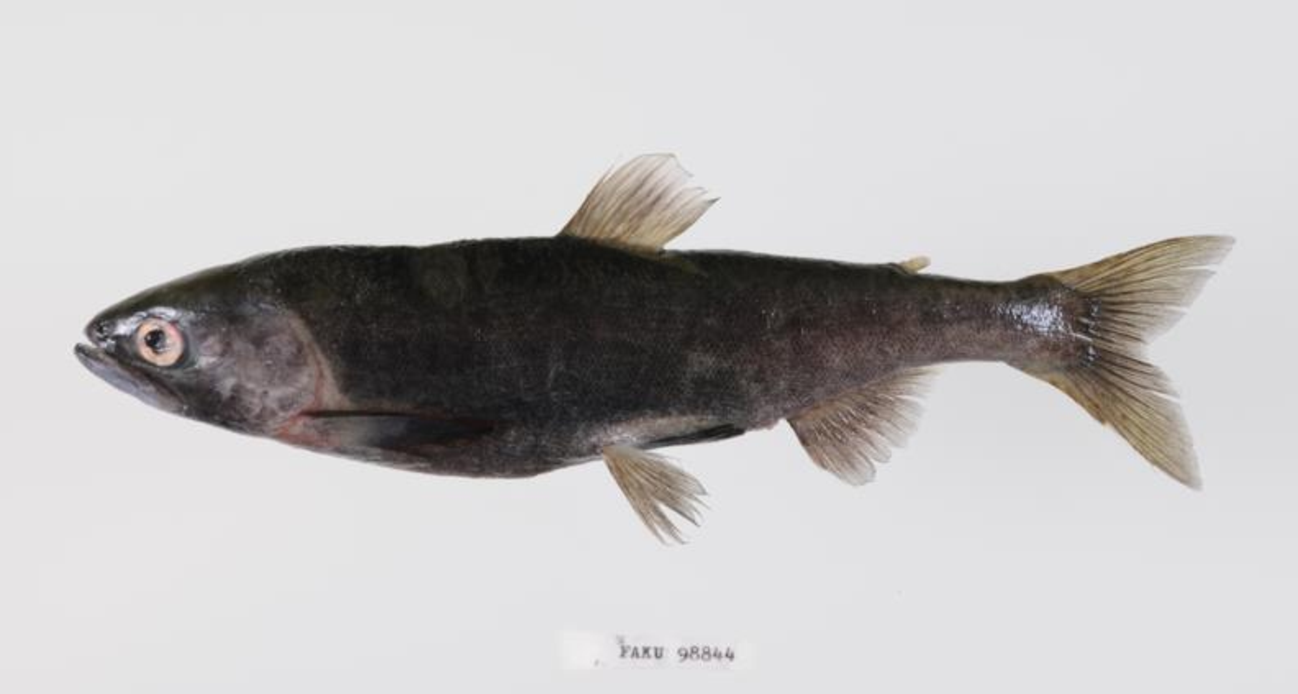
Alright, enough with the reptiles, amphibians, and birds, we’re getting back to some fish on this list. Say hello to the black kokanee.
And just like the beer brand of the same name, Kokanee once dropped off the face of a planet. Unlike the beer brand, the fish has resurfaced. It probably helps that the fish didn’t funnel all their cash into some weird, consumer-casted movie for no reason that nobody watched.

The black kokanee is a species of Japanese salmon that went extinct back in 1940. There were real efforts to stop this species from going extinct. A hydroelectric project made the lake too acidic for them to survive. As the population waned, conservationists attempted to transport them to another lake.
But the conservation efforts failed. Resulting in a stark lesson reminding us all of the permanency of extinction and the importance of acting before it’s too late.
But then, just to make sure we learned nothing, the fish was rediscovered in 2010.
26. Lahontan Cutthroat trout
As far as trout go, cutthroat trout are on the larger side. A brook trout weighs in at just under 10lbs, whereas a cutthroat trout averages just over 22lbs. But the Lahontan Cutthroat Trout is a real big boy. Sometimes called the “desert dinosaur,” they can weigh in at 40, 50, even 60lbs.
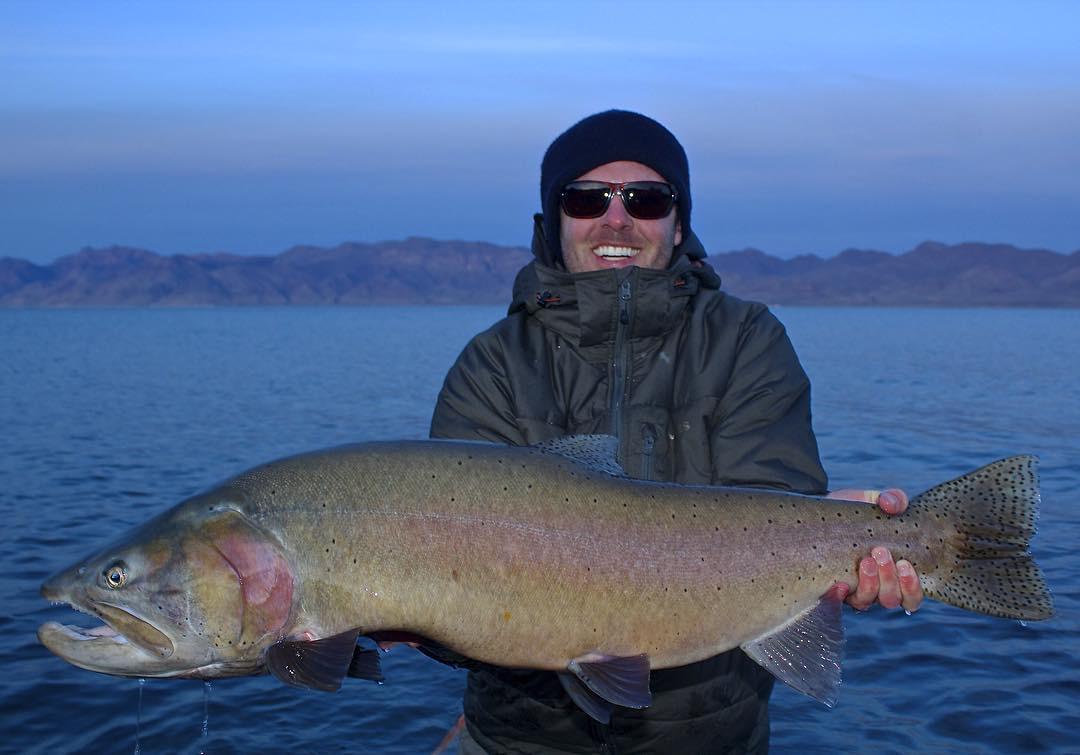
Out in Nevada, these fish were thriving for a while. But slowly overfishing and the introduction of invasive species started to thin them out. And then the building of the Derby Dam was the final nail in the coffin.
Or so it seemed. The fish disappeared entirely between 1940 and 1970.
When it was finally found, it wasn’t the great big creature people had once known. Found in a tiny stream, they were a shadow of their former selves. So it took years to finally identify.
The change in size wasn’t an evolutionary event.
As far back as the early 1900s, the wildlife commission had begun trying to save the species. It was well-intentioned, but hardly an exact method. They used a spray-and-pray style, throwing the trout into just about every waterway available.
Almost every single one of these environments failed to support them. Yet somehow, the last vestiges of the species were able to hold on in a little stream.
Naturally, this smaller environment wasn’t able to support their massive growth, so their size was limited. But, they retained the ability to grow. By 2000, relocated Lahontan cutthroat trout were being found up to 20lbs. And more recently, fishermen are reporting catches over 30lbs.
It may be that in the near future the desert dinosaur may get right back to its gigantic size.
Unlike most Lazarus creatures, the Lahontan cutthroat trout isn’t classified as endangered. Granted, they are still a federally threatened species. But that’s a good step forward for a fish we thought had gone extinct.
27. The Fernandina Island Galápagos’ Tortoise
This species of Galápagos’ tortoise is another Lazarus taxon in the 100+ year club. It wasn’t discovered until 1906 when a scientific expedition found and killed the only known specimen.

The good news is they were able to use that specimen to identify it as a new species. The bad news is they never found another one again. It wasn’t until February 2019 that we finally found another Fernandina Island Galápagos tortoise.
So the scientific record of this species consists of one dead male, one super old female. Along with a handful of bite marks and possible droppings in the 1960s.
They took this last species to Santa Cruz with the hopes of conserving the species. But with no signs of remaining males, hope is pretty slim here. But Fernandino Island isn’t heavily explored due to the volcanic activity. So are there more still out there? That’s a big ol’ maybe.
28. Omura’s Whale
Alright, this list had a bunch of downers. So instead, let’s talk about something awesome. Another freakin’ whale.
It’s pretty easy to understand how a bunch of frogs could go missing for a few decades. But the Omura’s Whale is the size of a bus. It doesn’t have a lot of places to hide. Of course, large animals going undetected isn’t totally out of the question.

— even from Ice Cube’s watchful gaze.
Earlier this year we told you about a brand new species of killer whale. And the giant squid, another massive animal, was discovered in 1857 and we couldn’t get a picture of it for nearly 150 years.
In fact, the Omura’s Whale wasn’t even officially recognized until 2003. Species had been caught back in the mid ‘70s, but at the time were thought to be a pygmy Bryde’s whale.
A “pygmy” at 10+ meters long.
Bro. Let’s just stop for a second and appreciate the sheer size of a Bryde’s whale. The Omura’s whale is the size of a bus and was thought to be a pygmy in comparison to these guys. That’s like calling Andre the Giant a pygmy because you’re comparing him to a baseball stadium.
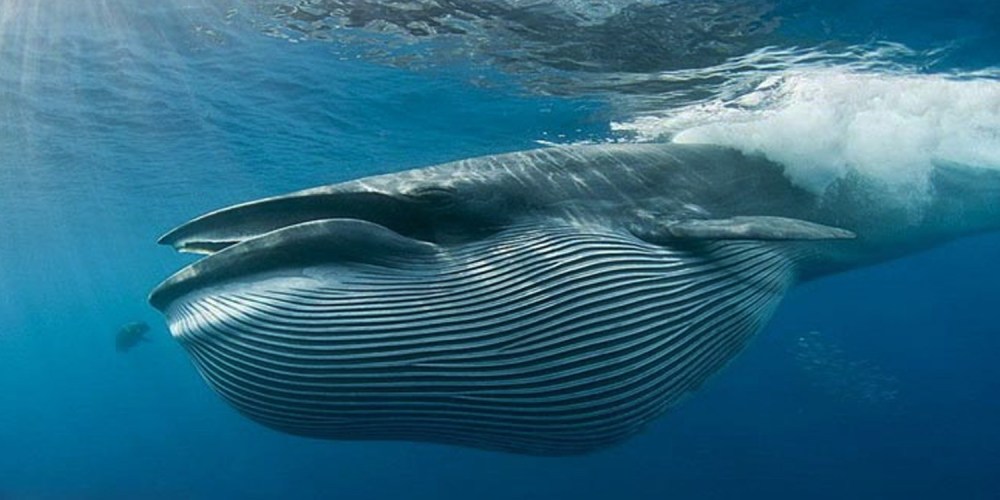
The Bryde’s whale has been measured up to 15.5 m — a little longer than a basketball court.
Now some people debate whether or not the Omura’s whale is technically a Lazarus creature. After all, it was never officially classified as extinct. However, it was assumed extinct after not being seen between 2003 and 2013. So we’re happy to include it on this list.
Well, that brings us to the end for now. But we’re hoping to see this list grow in the future. Even though it’s next to impossible, our fingers are still crossed for the megalodon’s return.


